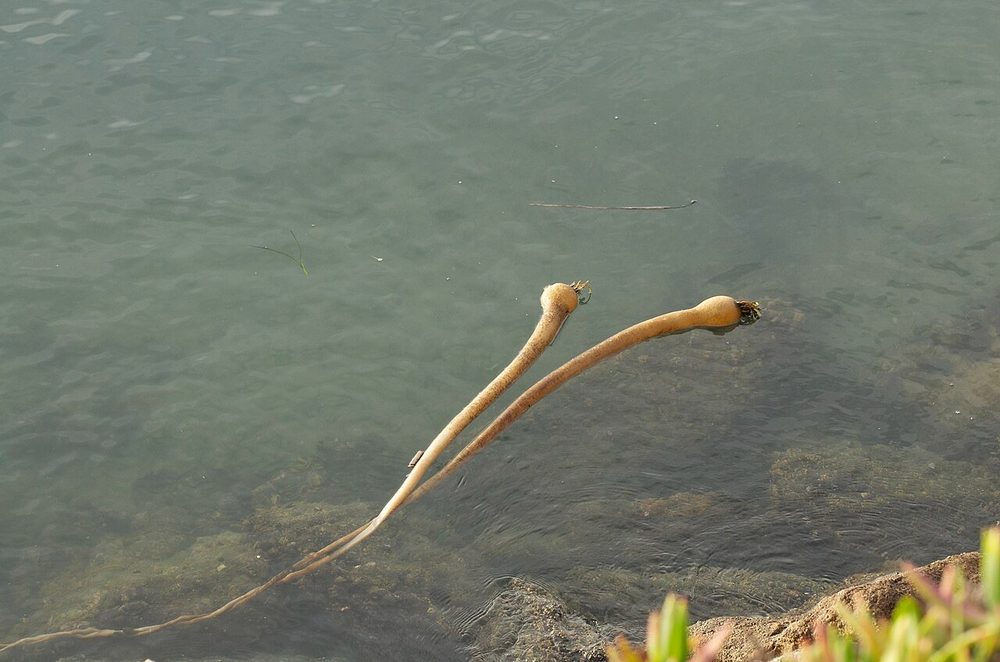
Bull Kelp
Grows from a single bulbous float, forming a golden-brown canopy at the surface. The most abundant kelp along Oregon, Washington, British Columbia and Alaska, and capable of growing up to 25 centimeters (about 10 inches) a day.
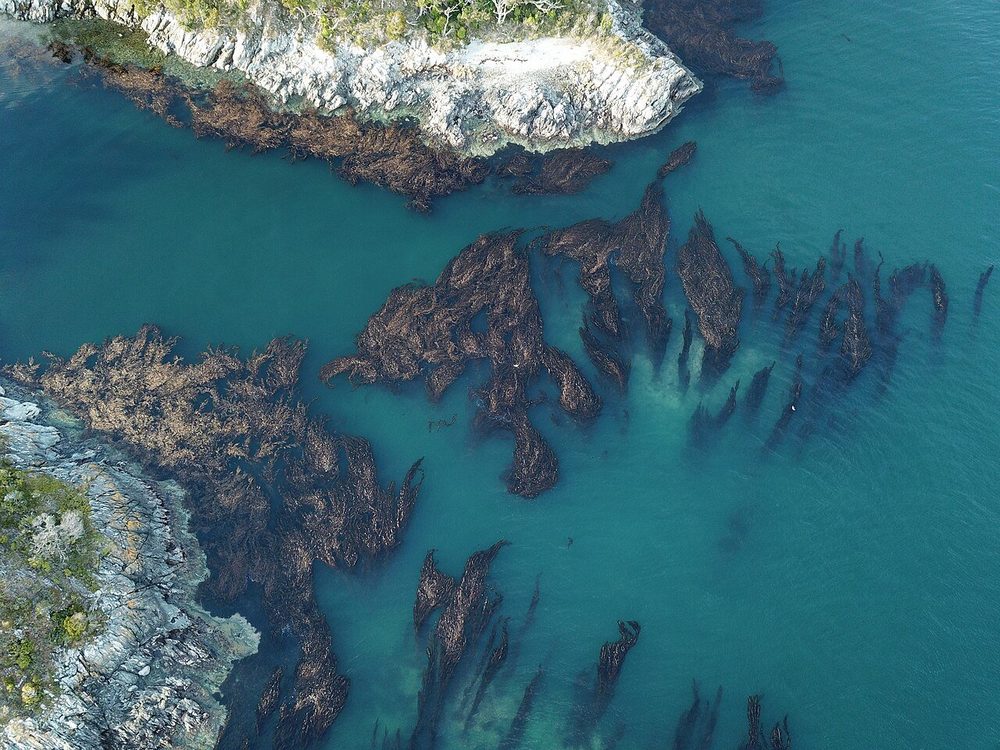
Giant Kelp
Grows blades all along its stem rather than from one float, and thrives in turbulent, nutrient-rich water. Can reach 175 feet tall, growing up to two feet in a single day under ideal conditions.
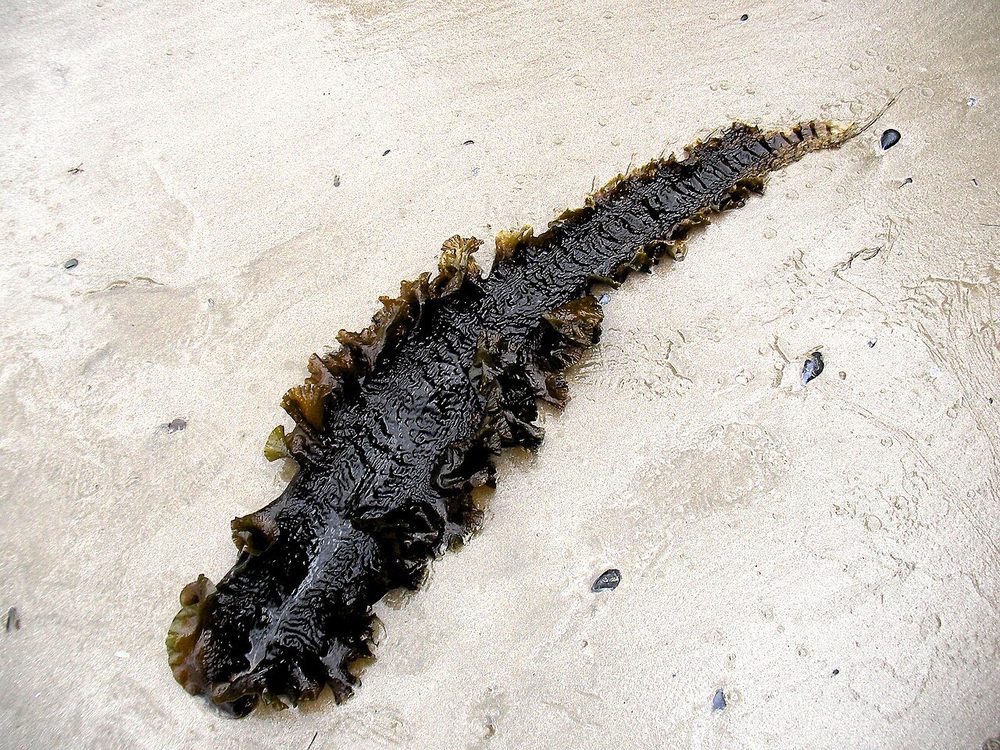
Sugar Kelp
Known for its long, ribbon-like blades, which can grow up to 16 feet long. Farmed on ropes along cold coastal waters around the world — no feed needed, since it grows by photosynthesis alone.
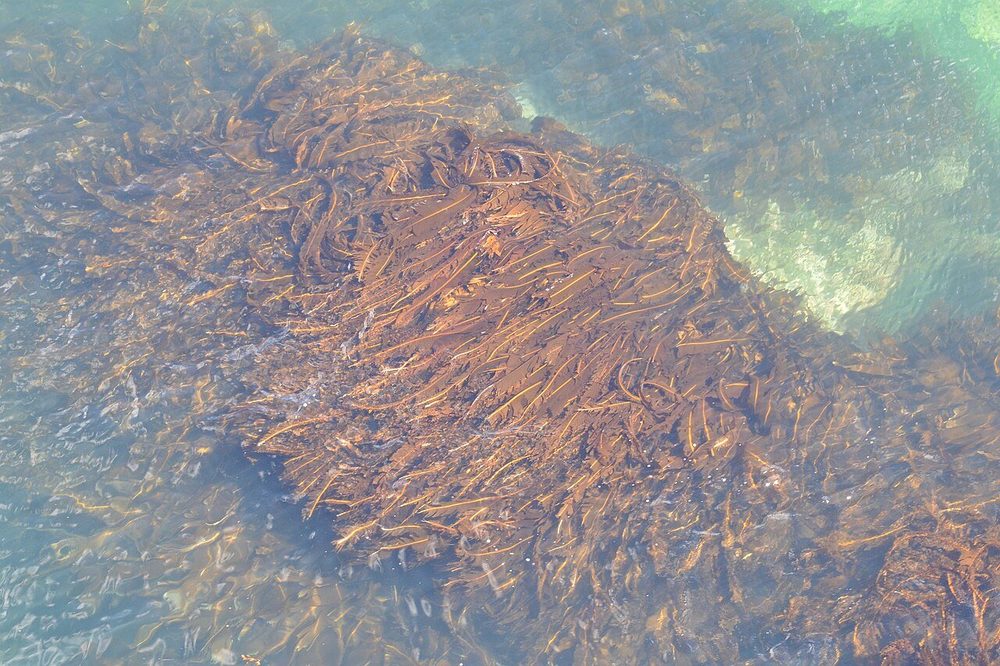
Winged Kelp
Found off the coasts of Maine, Atlantic Canada and Northern Europe, recognizable by the wavy blade running either side of a central midrib. Now grown experimentally alongside sugar kelp on New England's seaweed farms.
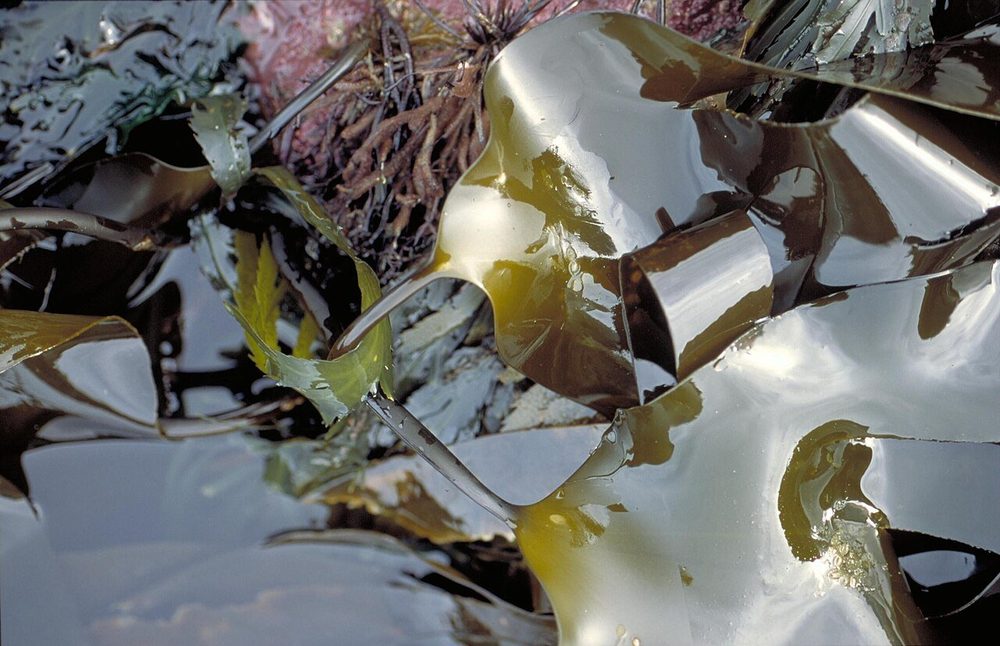
Oarweed
A dark, glossy kelp with a hand-like, finger-split blade, anchored by a spreading, dome-shaped holdfast. Common on rocky shores from the Arctic down to the Canary Islands.
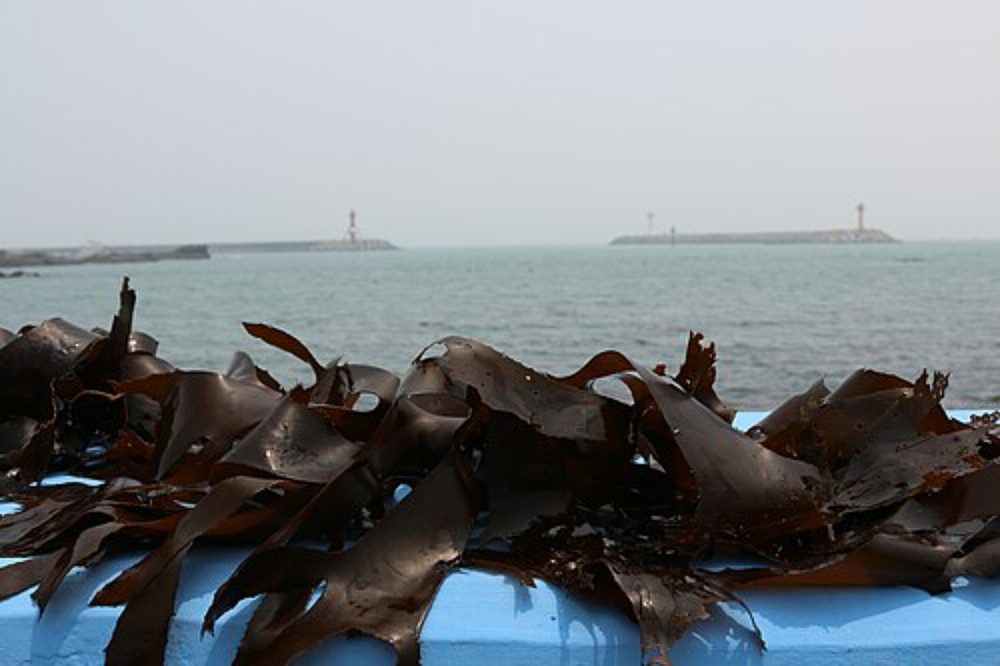
Kombu
Cultivated on ropes along the coasts of Japan, Korea, China and Russia — one of the most heavily farmed seaweeds in the world, valued both as food and, industrially, as a natural source of iodine and alginate.
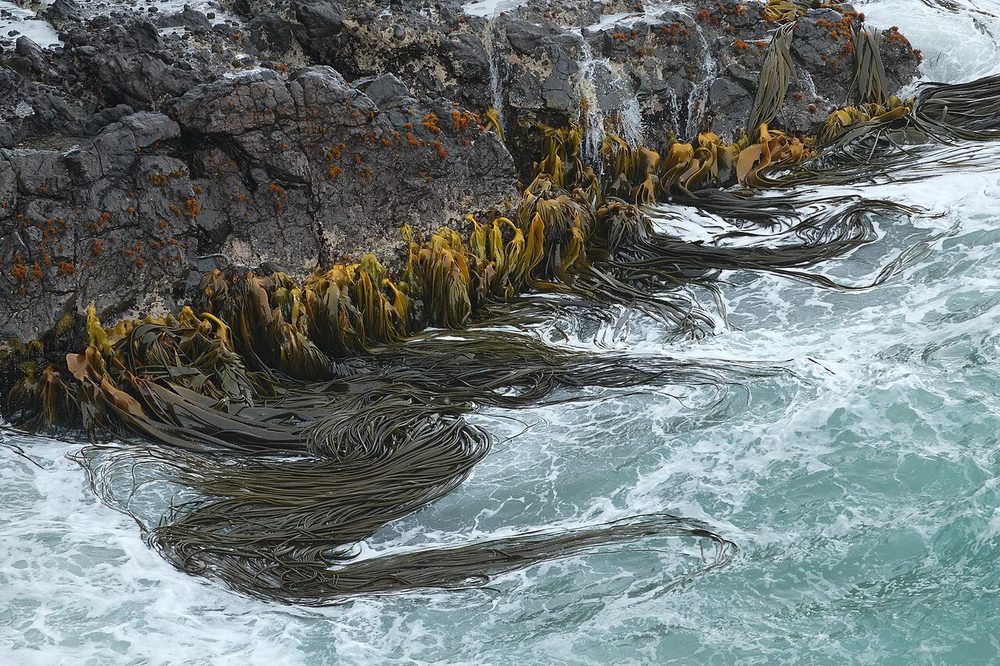
Southern Bull Kelp
Found on the storm-battered coasts of Chile, New Zealand and the sub-Antarctic islands. Genetic studies show torn-free rafts of this kelp, some over 12 meters long, drift for thousands of kilometers across the Southern Ocean, carrying whole communities of small invertebrates and reseeding life on far-flung coastlines.
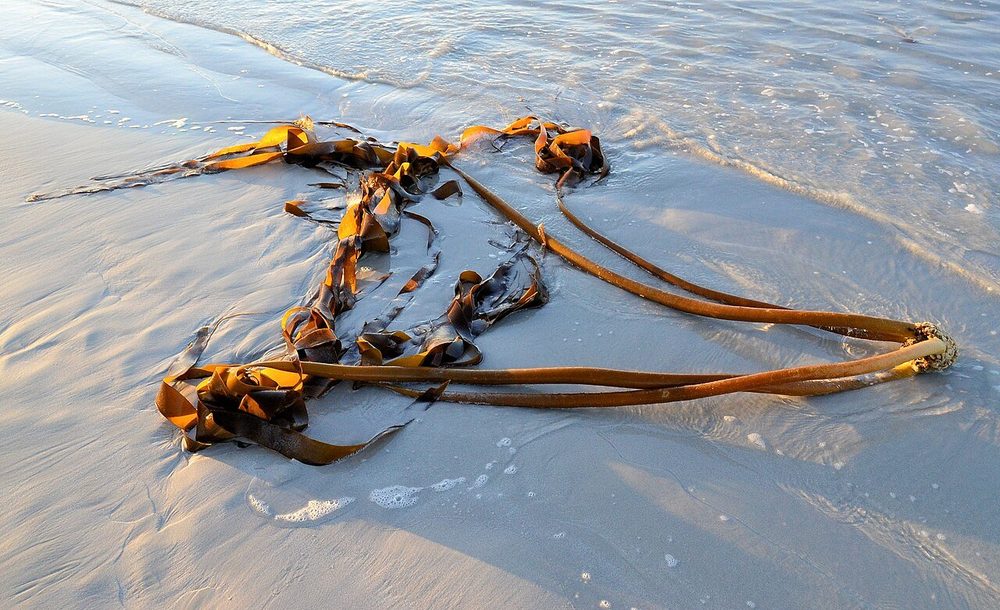
Sea Bamboo
South Africa's tallest kelp, reaching up to 12 meters from a single gas-filled stem topped with a bulb of strap-like fronds. Forms dense underwater forests along the West Coast.
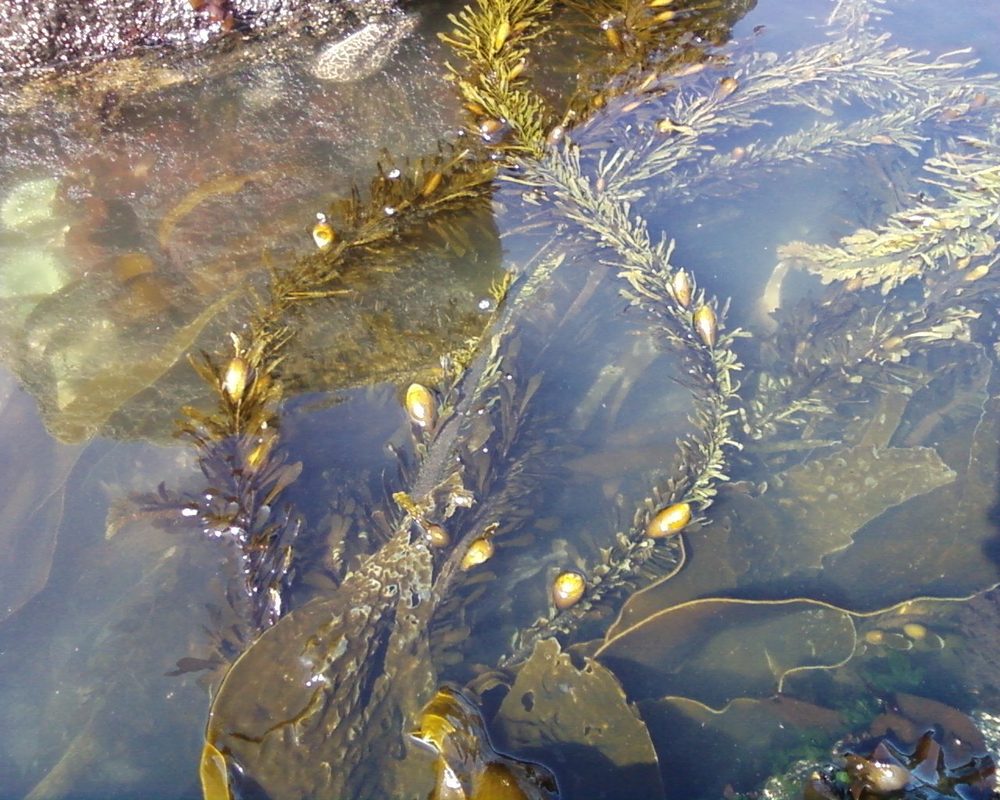
Feather Boa Kelp
Common in tidepools from Alaska to Baja California. Named for its long, branching main stem lined with small blades and floats, giving the whole plant a feathery, rope-like look.
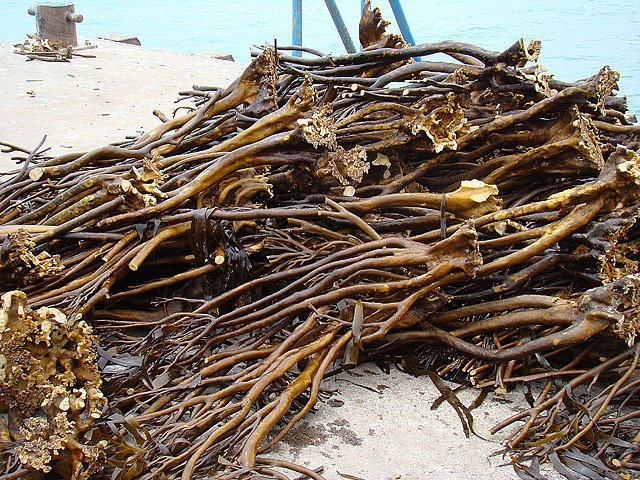
Huiro Kelp
Known locally as huiro, and one of the most economically valuable seaweeds in northern Chile, anchored by a massive, irregular holdfast. Grows slowly in the wild — under two centimeters a month — which is why researchers are now studying how to farm it and help restore harvested kelp forests.