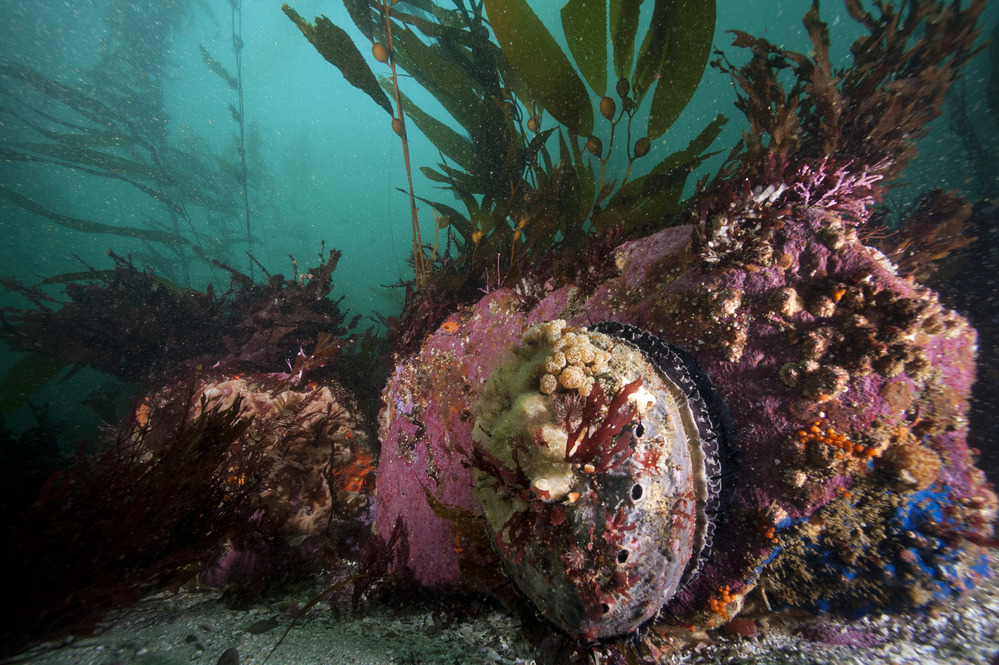
Because kelp absorbs CO₂ as it photosynthesizes, researchers have long wondered whether a dense enough kelp bed could locally counteract some of ocean acidification’s effects on nearby shellfish and other calcifying animals. A 2024 study from the University of Melbourne and University of Tasmania, led by Elisabeth Strain, put sensors in the water to actually check.
Over several ten-day stretches in late 2021, the team deployed pH and dissolved-oxygen loggers across a range of underwater habitats in Port Phillip Bay, Victoria, from intact kelp forest, to sparse and moderate kelp cover, to bare urchin barrens where kelp had already been grazed away, and paired the fieldwork with a review of 25 related studies. The comparison isolated how much difference the kelp itself, rather than other local conditions, was making to the surrounding water chemistry.
Intact kelp forest showed daily maximum pH about 0.11 units higher, and dissolved oxygen about 1 milligram per liter higher, than the barren sites, a real, measurable “refuge” effect that could matter for acid-sensitive species like abalone and coralline algae living nearby. But the researchers caution the effect was specific to this bay and this season, and that swinging pH up and down more sharply, even if the average is higher, could itself add stress for some calcifying species. They’re calling for the same kind of measurements at more sites, across more seasons and species, especially as warming and stormier weather start interacting with acidification at the same time.
Further reading: Strain, E.M.A. et al., “Assessing the role of natural kelp forests in modifying seawater chemistry,” Scientific Reports (2024).